Project
Retro console recap bench: tools for replacing capacitors
Tools for recapping retro consoles and handhelds: an iron with a chisel tip, desoldering pump and wick, flux, a multimeter, and lead-safe habits.
We may earn a commission if you buy through links on this page. How we make money
Short answer
Recapping means removing a console's aging electrolytic capacitors and fitting new ones, mostly through-hole and sometimes surface-mount. A temperature-controlled iron with a chisel tip, a desoldering pump, solder wick, flux and a multimeter cover most boards; a powered desoldering gun saves time if you do many. Treat old joints as leaded and keep lead-safe habits.
What fitsAll 5 items that fit
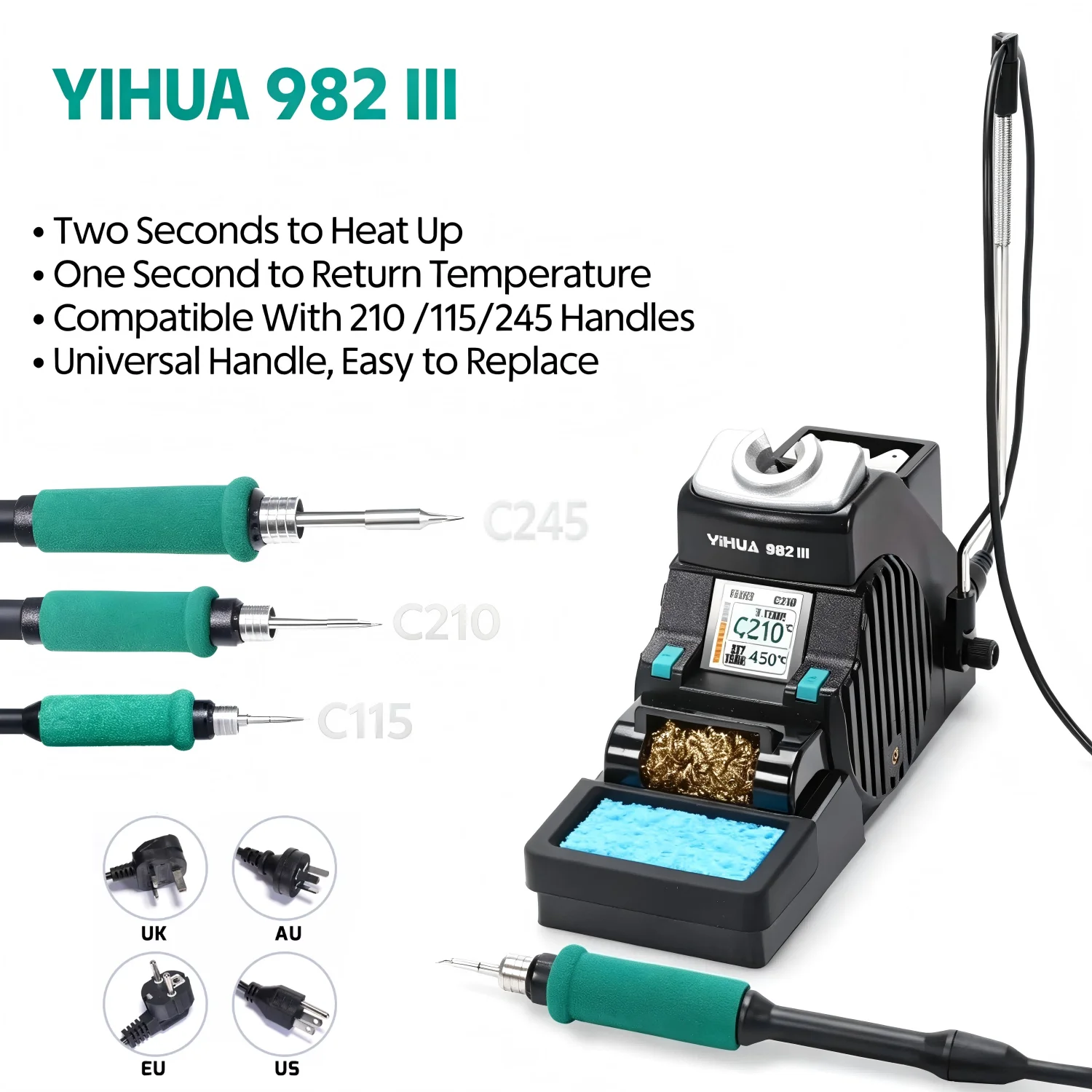 Station (C245)YIHUA 982‑III precision soldering station (C115/C210/C245)Image: AliExpressCheck price on AliExpress
 MultimeterUNI-T UT61E+ true-RMS digital multimeterImage: AliExpressCheck price on AliExpress
- Fume extractorYIHUA 948DQ‑I fume extractor with helping handsCheck price on Amazon
Key facts
- Suggested tip system
- C245 or T12 station with a chisel tip[1][2]Our suggestion: Adafruit says a chisel tip works well for through-hole parts, and SparkFun calls a solder vacuum a great tool for clearing through-holes.
- Key safety step
- Lead hygiene: wash before eating, and keep the bench away from living areas[3][4]HSE lists soldering with lead alloys as higher-risk lead work and says to wash hands and face before eating or drinking. EPA advises keeping hobby materials away from living areas and washing hobby clothes separately; young children are the main concern.
Watch out for
- Electrolytic capacitors are polarized. Photograph the board and note each capacitor's value, voltage and polarity mark before you remove anything.
- Clear the hole before you pull. Forcing a part out before every joint is molten or cleared can tear a pad off the board, which Adafruit calls a lifted pad.
- Big ground joints need more heat. SparkFun's advice for ground planes and large through-holes is a larger tip, a higher temperature and extra flux.
- Mains power supplies are a separate job. If the console has an internal mains power supply, leave that section to a qualified technician; this bench is for the low-voltage board.
What fits
Product details below are the seller's own description unless a source is shown. Pick the variant named for each item.
Image: AliExpress Station (C245)
YIHUA 982‑III precision soldering station (C115/C210/C245)Choose the 982-III C245 set, 120 V US variant.
The C245 set is the seller's description; a YIHUA-branded spec page lists only C115 and C210 handles for the 982-III, so check the handle and 120 V rating in the listing.
Image: AliExpress Multimeter
UNI-T UT61E+ true-RMS digital multimeterChoose the UT61E+ variant.
The listing shows no CAT rating; check the markings on the meter itself before measuring anything connected to mains.
Sold by UNI-T Direct Store on AliExpress
Fume extractor
YIHUA 948DQ‑I fume extractor with helping handsChoose the US plug variant.
The listing does not state the input voltage or filter performance. Check the rating label, and ventilate the room as well.
Solder wick
MG Chemicals 424‑NS #2 no-clean Super Wick, 0.05 in x 5 ftChoose the MG Chemicals 424-NS #2 (0.05 in x 5 ft).
A no-clean braid; add a narrower or wider roll if your pads call for it. On Amazon, check that 'Ships from / Sold by' shows Amazon.com or MG Chemicals.
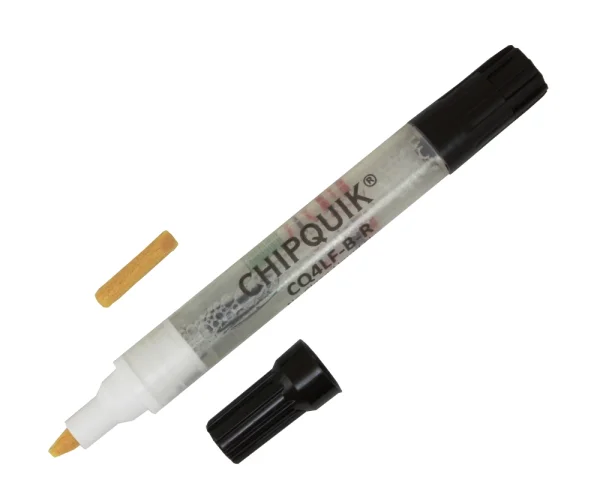
Image: Chip Quik Flux pen
Chip Quik CQ4LF no-clean flux pen, 6 mlChoose the Chip Quik CQ4LF 6 ml no-clean flux pen.
We have not confirmed its J-STD-004 class, so check Chip Quik's data sheet. On Amazon, check that 'Ships from / Sold by' shows Amazon.com or Chip Quik.
Essentials: a temperature-controlled iron with a chisel tip, a desoldering pump, solder wick, flux, solder, flush cutters, a multimeter for checking continuity afterward, and fume extraction or good ventilation.
Optional upgrades: a powered desoldering gun for big boards and repeat jobs, and a microscope or magnifier for small surface-mount capacitors in handhelds.
Questions
Pump or wick for removing old capacitors?
Usually both. SparkFun calls a solder vacuum a great tool for clearing solder left in through-holes, and wick, braided copper that soaks up solder, cleans what remains off the pads.[2]