Project
Phone microsoldering bench: iron, hot air and magnification
What a phone board repair bench needs: a C210 precision iron, hot air, a microscope, a multimeter and bench supply, plus the battery step to take first.
We may earn a commission if you buy through links on this page. How we make money
Short answer
Board-level phone repair means tiny surface-mount parts under magnification. Start with a precision cartridge iron (C210, adding C115 for the smallest parts), a 120 V hot-air station, a microscope with room for the iron, flux, a multimeter and a bench power supply. Deal with the battery first: iFixit warns that a charged lithium-ion battery may catch fire if damaged.
What fitsAll 7 items that fit
- Precision station (C210)YIHUA 982‑III precision soldering station (C115/C210/C245)Check price on Amazon
- Hot-air stationJCD 858D 700 W hot-air rework stationView on AliExpress
- Digital microscopeHayve 7‑inch 1200X digital microscope (DM9)View on AliExpress
Key facts
- Suggested tip system
- C210, adding C115 for the smallest parts[1][2]Our suggestion, based on JBC's positioning: C210 (40 W peak) for small SMD parts under magnification, C115 (25 W peak) for high-precision micro-soldering under a microscope.
- Key safety step
- Handle the battery exactly as your phone's repair guide says[3]iFixit warns that a charged lithium-ion battery may catch fire if damaged; its ROG Ally battery guide, for example, says to drain the battery below 25% before starting.
Watch out for
- Ignore the X number on digital microscopes. Digital magnification depends on screen size (Andonstar quotes up to 300X for its AD409 on a 27-inch monitor); working distance and a steady stand matter more.
- Screen lag bothers some people. EEVblog forum users report that display lag and the flat image make soldering under some digital microscopes harder, though one Andonstar owner noticed no lag. A stereo microscope avoids both.
- Static can kill phone chips. ESDA says many components are susceptible to discharges below 100 V, so work on a grounded mat with a wrist strap.
What fits
Product details below are the seller's own description unless a source is shown. Pick the variant named for each item.
Precision station (C210)
YIHUA 982‑III precision soldering station (C115/C210/C245)Choose the 982-III C210 set, 120 V US variant.
A YIHUA-branded site lists the 982-III at 110-240 V with a 40 W C210 handle. Check whether a C115 handle is offered if you need one later.
Check price on AmazonView on AliExpressHot-air station
JCD 858D 700 W hot-air rework stationChoose the 110 V US-plug variant.
The same listing also sells a 220 V EU version. The seller states 700 W.
Sold by JCD Official Store
View on AliExpressDigital microscope
Hayve 7‑inch 1200X digital microscope (DM9)Choose the DM9 variant.
Working distance and field of view are not stated on the listing, and 1200X is the seller's figure. Check there is room for the iron under the lens.
Sold by Hayve Official Store on AliExpress
View on AliExpressMultimeter
UNI-T UT61E+ true-RMS digital multimeterChoose the UT61E+ variant.
The listing shows no CAT rating; check the markings on the meter itself before measuring anything connected to mains.
Sold by UNI-T Direct Store on AliExpress
Check price on AmazonView on AliExpress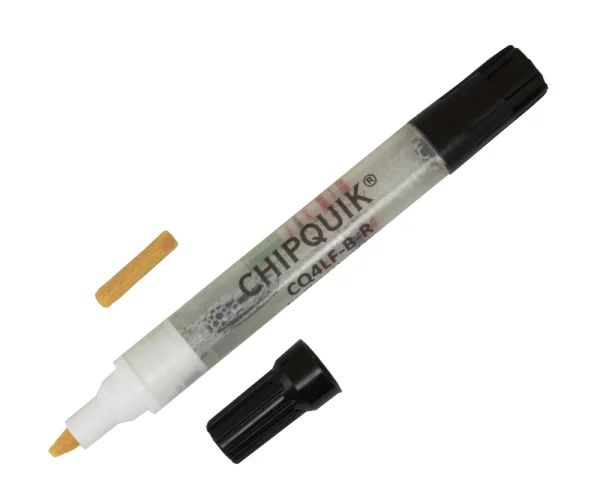
Image: Chip Quik Flux pen
Chip Quik CQ4LF no-clean flux pen, 6 mlChoose the Chip Quik CQ4LF 6 ml no-clean flux pen.
We have not confirmed its J-STD-004 class, so check Chip Quik's data sheet. On Amazon, check that 'Ships from / Sold by' shows Amazon.com or Chip Quik.
Check price on AmazonESD mat and wrist strap
iFixit Portable Anti-Static Mat, 24 x 24 in, with wrist strap and grounding cordChoose the iFixit Portable Anti-Static Mat (24 x 24 in, foldable).
Mat, 6 ft wrist strap and grounding wire with a clip. iFixit states the mat's surface resistivity (10^7-10^9 ohms), not its resistance to ground; check the strap cord's resistor marking. On Amazon, check that 'Ships from / Sold by' shows Amazon.com or iFixit.
Check price on AmazonBench power supply
Siglent SPD1168X programmable linear bench power supply (16 V / 8 A)Choose the SPD1168X (0-16 V, 0-8 A).
Before first power-on, check that the rear line-voltage selector reads 120 V. We found no NRTL listing in Siglent's documents. On Amazon, check that 'Ships from / Sold by' shows Amazon.com or Siglent.
Check price on Amazon
Essentials: a C210 station, a 120 V hot-air station with small nozzles, a stereo or digital microscope with enough working distance for the iron, flux, fine tweezers, solder wick, a multimeter, a bench power supply with an adjustable current limit, an ESD mat and wrist strap, and precision screwdrivers and opening tools.
Optional upgrades: a C115 handle, a board preheater, and a trinocular microscope head for a camera.
Questions
Do I need C115 to start phone repair?
Usually not. JBC positions C210 (40 W peak) for small SMD parts under magnification and C115 (25 W peak) for the very smallest components under a microscope, so C210 covers more first jobs; add C115 when parts get too small for it.[1][2]
Digital or stereo microscope for phone boards?
A stereo microscope gives each eye its own view, so you can judge depth when placing the iron; AmScope advertises an 8-inch (200 mm) working distance for its SM-6TZ, depending on the Barlow lens fitted. Digital screen microscopes make recording easy, but some EEVblog users find lag and the flat image harder to work under.[4][5]
Why use a bench power supply on a phone board?
It powers the board from a set voltage with a current limit you choose, and shows how much current the board draws. If a short tries to pull more, the supply holds the current at the limit instead (Tektronix), which helps you find the fault without overheating the board.[6]