Guide · Solder and flux
Rosin vs no-clean vs water-soluble flux
What the three flux names tell you, how to read a J-STD-004 code like ROL0, which residues must be cleaned off, and which flux to keep on a repair bench.
We may earn a commission if you buy through links on this page. How we make money
Picks that fit
- MG Chemicals 4900 SAC305 lead-free no-clean solder wire, 0.032 in, 113 gCheck price on Amazon
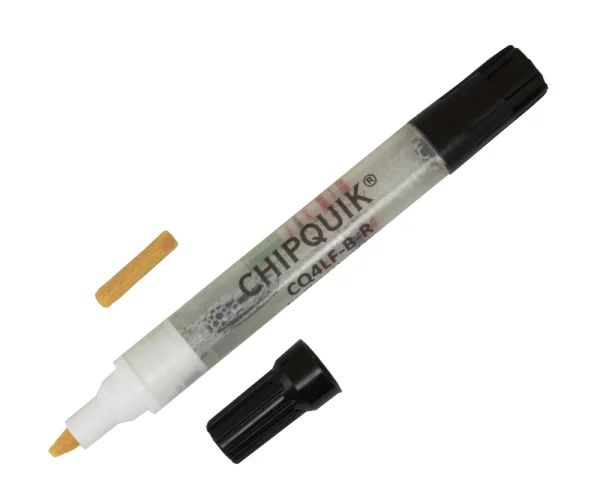 Chip Quik CQ4LF no-clean flux pen, 6 mlImage: Chip QuikCheck price on Amazon
Short answer
The three names answer different questions. Rosin is what a flux is made from; no-clean and water-soluble describe what happens to the residue. SparkFun says no-clean residue does not need cleaning, while water-soluble residue must be removed.[1] The categories overlap: Kester's 275 no-clean wire carries the rosin code ROL0.[2] For a home repair bench, a no-clean flux with a published code is the simplest default.
Picks that fitAll picks and how to choose
- MG Chemicals 4900 SAC305 lead-free no-clean solder wire, 0.032 in, 113 gCheck price on Amazon
- Chip Quik CQ4LF no-clean flux pen, 6 mlImage: Chip QuikCheck price on Amazon
The three types side by side
| Type | What the name tells you | The residue | Do you have to clean it off? |
|---|---|---|---|
| Rosin | It is made from rosin; its J-STD-004 code starts with RO | Kester: non-conductive and non-corrosive[3] | Normally no, since removal is cosmetic. Yes if the board runs above 200 °F (about 93 °C), where Kester says the residue melts and becomes conductive |
| No-clean | The residue is meant to stay | Kester 275: extremely clear without cleaning[2] | No, per SparkFun; use isopropyl alcohol if you want it off[1] |
| Water-soluble | The residue is meant to be washed off | Must not be left on the board | Yes: SparkFun says to remove any that remains[1] |
One more type never belongs on a circuit board. Canfield, a solder maker, says acid-core solder is not recommended for electrical or electronic work because its residue is corrosive.[4]
How to read a flux code
The label that settles the question is the J-STD-004 code on the data sheet. As Evertiq's explainer of the standard sets out, it has four characters:[5]
- Two letters for the base: RO rosin, RE resin, OR organic, IN inorganic.
- One letter for activity: L low, M moderate, H high.
- A digit for halides: 0 for none detected, 1 for present.
So ROL0 means rosin, low activity and no detectable halides. A resin-based flux reads differently: MG Chemicals classifies the flux in its 4900 SAC305 wire as REL0 under J-STD-004B,[6] which on the same scheme means resin, low activity and no halides. Chip Quik lists its CQ4LF-B-R no-clean flux pen as ORL0, an organic flux with low activity and no halides, and describes it as water-based and rosin-free.[7] The page does not say which revision of the standard it uses. IPC lists J-STD-004D, "Requirements for Soldering Fluxes", among its 2024 releases.[8]
Two cautions:
- Codes can change between revisions. Kester rates its EM919G solder paste ROL0 under J-STD-004 but ROM0 under the newer J-STD-004B.[9]
- Old labels are loose. Kester sells its 185 liquid flux as mildly activated rosin (RMA) and classifies it ROL0,[10] but an unbranded "RMA" syringe may not match that.
Which flux for which job
| Job | Reach for | Why |
|---|---|---|
| General repair, touch-up and rework | No-clean, with a published code | The residue can stay, so a missed spot is not a problem |
| Heavy joints, ground planes and desoldering | Extra flux on top of the wire's core | SparkFun's fix for heavy joints includes adding flux[11] |
| Boards that run hotter than 200 °F | Clean off any rosin residue afterward | Kester says rosin residue must come off at those temperatures[3] |
| Boards you can wash thoroughly | Water-soluble | Only if you will remove every trace |
| You react to rosin fumes | A flux without rosin | HSE suggests considering fluxes without rosin[12] |
Wire core, liquid, gel or pen
Flux comes in several forms:
- The core of your solder wire covers ordinary joints.
- Liquid flux, such as Kester 185,[10] spreads quickly over a whole area.
- Tacky gel in a syringe stays where you put it, which suits rework on chips and connectors.
- Flux pens lay a thin line of liquid exactly where you need it.
Solder wick usually carries dry flux of its own, as iFixit notes,[13] but a little fresh flux on the joint still helps it work. See how to use solder wick.
Our default for a home bench
- Flux-cored wire with a no-clean core and a published code, such as ROL0.
- A no-clean gel or pen for rework and heavy joints.
- No water-soluble flux unless you have a way to clean every trace off.
- No acid or plumbing products anywhere near a circuit board.
Picks that fit2 products
Wire: the MG Chemicals 4900-112G is SAC305 with a no-clean core that MG classifies REL0 (0.032 in, 113 g).
More on choosing
Pen: the Chip Quik CQ4LF-B-R is a 6 ml refillable no-clean flux pen that Chip Quik classifies ORL0 (organic, low activity, no halides). On Amazon, check that 'Ships from / Sold by' shows Amazon.com or the brand before you buy.
MG Chemicals 4900 SAC305 lead-free no-clean solder wire, 0.032 in, 113 g
Chip Quik CQ4LF no-clean flux pen, 6 ml
This keeps every residue on your bench in the "can stay" column, so a joint you forget to clean is not a problem. If you want boards to look clean anyway, see how to clean flux residue.
Next
Questions
Is no-clean flux the same as rosin flux?
Not by definition, though the two can overlap. Rosin describes what the flux is made of, while no-clean describes the residue. Kester's 275 no-clean wire, for example, carries the rosin code ROL0.[2][5]
Do I have to clean no-clean flux off the board?
No. SparkFun says cleaning and flux removal are not required with no-clean flux. Use isopropyl alcohol if you want to remove the residue for looks or inspection.[1]
Can I leave rosin flux residue on a board?
Usually. Kester says rosin residue is non-conductive and non-corrosive and removal is cosmetic, unless the board runs above 200 °F (about 93 °C), where the residue melts, becomes conductive and must be removed.[3]
What does RMA flux mean?
Mildly activated rosin, an older label. Kester's 185 liquid flux is sold as RMA and classified ROL0 under J-STD-004, but that applies to that product; an unbranded RMA syringe may not match it.[10]
Can I use plumbing or acid flux on electronics?
No. Canfield, a solder maker, says acid-core solder is not recommended for electrical or electronic work because its residue is corrosive. Buy flux labeled for electronics.[4]